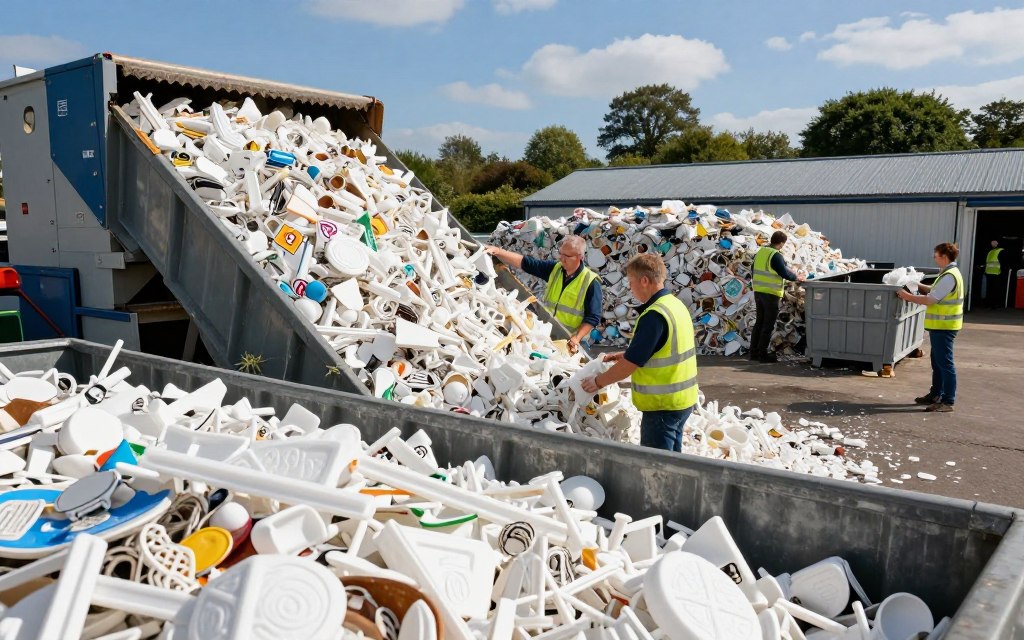

Do you recycle polystyrene? Some types can be recycled, but acceptance varies widely. Select recycling centers, specialist collection points, and some retailers accept clean, expanded polystyrene packaging. Food-contaminated items, loose foam pieces, and mixed-material products are often rejected.
This polystyrene recycling UK guide explains local options. It covers council collection rules, recycling symbols, and available facilities. It also explains retailer schemes and preparation needs for effective recycling.
Before recycling, check your local authority’s policy on where to recycle polystyrene. Rules can differ greatly between councils, so confirm local guidance first. When you search for recycle polystyrene near me, confirm the council’s guidance.
Key Takeaways
- Some councils accept specific types of polystyrene, while others do not.
- Clean expanded polystyrene packaging is often recyclable.
- Food-contaminated and mixed-material items are usually rejected.
- Check local council websites for the latest recycling guidance.
- Retailers may offer take-back schemes for packaging materials.
Understanding Polystyrene: Types and Environmental Impact
Polystyrene is a lightweight plastic used widely in packaging and insulation. Learning about its types helps explain the polystyrene environmental impact and the need to recycle.
What Is Expanded Polystyrene (EPS)?
Expanded Polystyrene, or EPS, is foam made from small beads that expand when heated. This lightweight, white foam protects appliances, electronics, and food-service products. Its structure provides cushioning and insulation but creates recycling challenges.
What Is Extruded Polystyrene (XPS)?
Extruded polystyrene, or XPS, is denser and more uniform than EPS. It usually serves as insulation boards for construction and specialized packaging. XPS offers better thermal resistance, but its additives can affect recycling.
Why Polystyrene Recycling Matters for the Environment
Recycling polystyrene lowers demand for virgin plastic and reduces waste. Both EPS and XPS are hard to recycle because they are bulky and difficult to sort in standard systems. However, expanded polystyrene recycling and XPS recycling can divert significant amounts from landfills and ease environmental concerns.
Because polystyrene is durable, it can break into smaller pieces that threaten wildlife and ecosystems. Recycling helps, but reducing and reusing polystyrene products also matter. Knowing these materials’ features can guide responsible disposal and recycling.
Do You Recycle Polystyrene Through Standard UK Council Collections?
Polystyrene recycling in the UK can seem complex. Most councils do not accept polystyrene in their kerbside recycling bins, even with a plastic recycling symbol. These kerbside recycling UK limits show why residents need clear waste guidance.
Polystyrene is light, but it creates problems during collection and processing. It takes up much space and can break apart during sorting. Small pieces may contaminate paper and cardboard, making whole recycling batches unusable.
Polystyrene has little market value unless councils collect it cleanly and densely. Colored or molded foam packaging also challenges automated sorting equipment. These issues explain why many councils exclude it from curbside polystyrene recycling programs.
Why Most Councils Reject Polystyrene in Kerbside Bins
Many councils reject polystyrene to keep operations efficient. Broken pieces can contaminate other materials, while weak demand makes a council polystyrene collection too costly.
Exceptions: Councils That Accept Polystyrene at the Curb
Some local authorities accept clean expanded polystyrene (EPS) at the curb. Others allow it at communal recycling points or through special collections. Check your council’s official guidance for local recycling rules.
To check EPS or XPS acceptance, enter your postcode in an official waste-services search tool or contact your local authority. Ask whether items must be clean and bagged, food-service foam is excluded, and collection covers residents or businesses. Do not place polystyrene in recycling bin collections just because it carries a number 6 marking.
| Council Name | Accepts EPS? | Collection Method |
|---|---|---|
| London Borough of Camden | Yes | Kerbside |
| Manchester City Council | No | N/A |
| Bristol City Council | Yes | Communal Points |
| Glasgow City Council | No | N/A |
Identifying Recyclable vs Non-Recyclable Polystyrene
Knowing the difference between recyclable polystyrene and non-recyclable polystyrene helps you make informed choices. Polystyrene is common in household items, but not every item can be recycled. Knowing which items qualify supports effective waste management.
Common Household Items Made from Polystyrene
Many everyday products use polystyrene packaging. Common examples include:
- Clean protective packaging from electronics, such as televisions and computers.
- Molded corner blocks used in shipping.
- Insulation offcuts from construction.
- Disposable cups, trays, and containers.
- Takeaway packaging.
- Loose-fill foam pieces often used for cushioning.
Not all polystyrene items are recyclable. Food residue, grease, and other materials can hinder recycling. Check each item’s cleanliness before disposal.
Recycling Symbols and Markings to Look For
To identify recyclable polystyrene, look for the plastic number 6 marking. It shows that the item uses polystyrene. Labels often include PS, EPS (Expanded Polystyrene), and XPS (Extruded Polystyrene).
However, these markings do not guarantee acceptance by local recycling facilities.
Many facilities have specific requirements, so check their guidelines. Remove obvious contaminants when possible. This supports foam packaging recycling and helps reduce waste.
Finding Local Recycling Centers Across the UK
Finding a polystyrene recycling center in the UK is simple when you use the right tools. Several resources can help you locate a suitable drop-off point for polystyrene waste. The Recycle Now locator is one of the best tools.
Using the Recycle Now Locator Tool
The Recycle Now locator is a user-friendly online tool that helps you find nearby recycling centers. It supports a “recycling center near me” search. To use it:
- Visit the Recycle Now website.
- Enter your postcode in the search bar.
- Search for terms like “polystyrene,” “expanded polystyrene,” or “plastic packaging.”
Results may list several facilities, so read each description carefully. Some accept only certain polystyrene types, such as household packaging. Others may handle construction insulation instead.
Household Waste Recycling Centres (HWRCs) Explained
Household Waste Recycling Centres (HWRCs) are council-run or contracted sites that handle household waste streams. Many HWRCs may accept certain forms of clean EPS in marked containers, but rules vary widely.
- Check if the HWRC accepts foam packaging.
- Verify if you need proof of address to use the facility.
- Find out if a booking is required before your visit.
- Understand any restrictions on vans, trailers, or commercial loads.
If online details are unclear, call the site about HWRC polystyrene, large amounts, or XPS insulation. Keep polystyrene dry during transport, and secure large pieces to prevent damage. Do not mix recyclable foam with general waste.
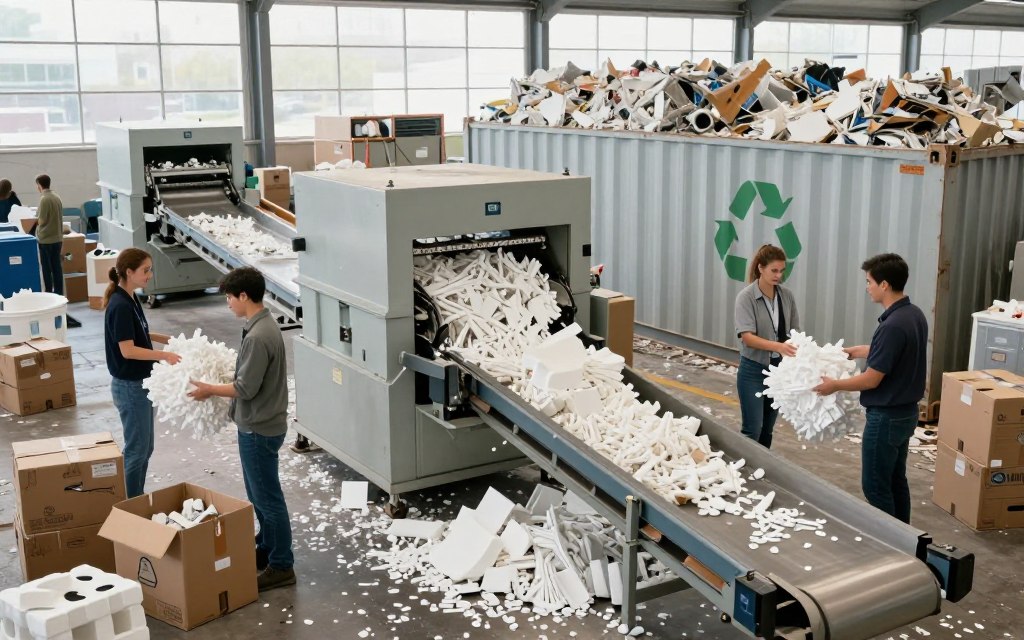
A recycling center may not accept every type of polystyrene. Always check first to confirm which materials it accepts.
Specialized Polystyrene Collection Points by Region
Finding a polystyrene collection point is essential for responsible recycling. Each UK region has different options. This guide covers England, Scotland, Wales, and Northern Ireland.
Collection Points in England
In England, check your local council’s waste pages for England polystyrene recycling guidance. The Recycle Now locator can help you find nearby recycling centers.
Collection systems can vary significantly. Metropolitan boroughs, county councils, unitary authorities, and London boroughs may use different systems. Some designated Household Waste Recycling Centres (HWRCs) accept polystyrene, but others may not.
Collection Points in Scotland
In Scotland, recycling is similarly decentralized. Consult your local authority for accurate Scotland polystyrene recycling information. Many councils offer specialized drop-off sites, which may suit polystyrene better than household bins.
Scotland’s national guidance stresses the importance of these specialized facilities. Check your local authority’s website for accepted materials and collection schedules.
Collection Points in Wales
Wales has a unique recycling approach. Check your local council’s calendar and accepted materials list for Wales polystyrene recycling. Each authority may have different rules.
Some councils have specific polystyrene collection points, while others accept it only during special events. Contact your local council to follow the correct procedure.
Collection Points in Northern Ireland
In Northern Ireland, use your local council’s information for Northern Ireland polystyrene recycling. Confirm whether the collection point serves household packaging, construction materials, or commercial waste.
Specialist collection points may be hosted by recycling companies, packaging suppliers, retailers, or community recycling centers. Use this checklist before visiting:
- Identify whether the item is EPS or XPS.
- State the approximate quantity you wish to recycle.
- Confirm that the material is clean and dry.
- Ask about any fees associated with recycling.
- Verify opening times and any booking requirements.
These steps support effective polystyrene recycling in your region. Responsible disposal helps reduce environmental impact.
Retailer Take-Back and Mail-Back Schemes
When local councils do not accept polystyrene, a retailer polystyrene take-back scheme offers another option. Consumers return packaging to selected retailers for proper recycling.
Major UK Retailers Offering Polystyrene Take-Back
Several major UK retailers now offer take-back schemes for polystyrene. Stores selling large appliances, electronics, and furniture often accept returned molded EPS packaging. Many retailers remove this packaging during delivery, supporting a packaging recycling scheme.
Check with the retailer before returning packaging. Some retailers may not accept polystyrene from unrelated purchases. Ask about their policy during purchase or delivery.
“The key to effective recycling is ensuring that the material is clean and properly sorted before it reaches the recycling facility.”
Commercial Mail-Back Recycling Services
Commercial mail-back recycling services provide another option for polystyrene. A polystyrene mail-back program especially helps businesses, offices, and organizations with large amounts of EPS waste.
Many mail-back programs provide collection boxes or bags, and some arrange pickups at your location. Check each service’s requirements before using it.
- Minimum quantities for pickup
- Preparation requirements for the polystyrene
- Pricing and transportation details
- Contamination limits for accepted materials
- Certificates of recycling provided
Before using an EPS recycling service, confirm whether it accepts EPS, XPS, or both types of polystyrene. Do not place foam in a parcel until the service confirms acceptance. This supports commercial polystyrene recycling by focusing on clean, concentrated quantities instead of occasional contaminated food containers.
Step-by-Step Guide to Preparing Polystyrene for Recycling
Learning how to recycle polystyrene can help protect the environment. Follow these steps to reduce contamination and make transport foam packaging safer.
Step 1: Clean and Separate the Material
Start by separating polystyrene from cardboard, paper, plastic film, wood, and metal. To prepare polystyrene for recycling, remove food, dirt, grease, and visible residue.
Clean EPS packaging carefully to support a reliable recycling process. If you cannot remove contamination, dispose of the item in general waste under local guidance.
Step 2: Remove Non-Polystyrene Components
Next, carefully remove tape, labels, plastic covers, cables, metal brackets, and attached cardboard. Be gentle so you do not damage the foam. Insulated boxes with foil liners or foam bonded to boards may need specialist handling.
Step 3: Compress or Break Down Large Pieces
If the facility allows it, break large packaging into manageable pieces. Do not crush foam into loose beads, burn it, or use methods that release dust or fragments. Do not compress it when a mail-back provider requires a specific form.
Step 4: Transport to the Designated Facility
Place clean pieces in a secure container or bag. Keep lightweight fragments inside, keep the load dry, and secure it in your vehicle.
Before traveling, confirm the destination accepts these materials and follow site staff instructions. If construction insulation is old or unknown, do not disturb it. Seek professional guidance if hazardous substances may be present.
By following these steps for polystyrene recycling preparation, you can support a cleaner environment and sustainable practices. For more information on recycling in your area, visit this resource.
Reducing Polystyrene Waste: Reuse and Sustainable Alternatives
Finding ways to reduce polystyrene waste supports a sustainable future. Through reuse and sustainable packaging alternatives, households and businesses can lower their environmental impact.
One effective method is reusing polystyrene packaging. Clean, intact foam can support future shipping, storage, or creative craft projects. People can donate usable foam to local schools, theaters, or community groups, but never share dirty or damaged material.
Businesses also play a vital role in reducing polystyrene waste. They can return reusable packaging to suppliers or redesign shipping systems to use less polystyrene. Consolidating deliveries can further reduce needed packaging.
Many eco-friendly alternatives to polystyrene packaging are available. These eco-friendly packaging choices include:
- Molded paper pulp
- Corrugated cardboard
- Recycled-content paper cushioning
- Reusable plastic totes
- Wool or plant-fiber insulation
- Compostable or fiber-based food packaging
Although “compostable” alternatives to EPS sound appealing, many need commercial processing and cannot go in home compost. Buyers and businesses should consider each product’s life cycle, including durability, transport efficiency, and local recycling options.
Reducing unnecessary packaging and choosing reusable systems often works better than relying only on recycling after use. Conscious choices can help everyone support a more sustainable future.
Conclusion
Knowing where can I recycle polystyrene supports effective waste management. In the UK, responsible polystyrene disposal is not always simple. Many councils reject polystyrene in curbside collections, so check local rules before using your recycling bin.
For polystyrene recycling advice, identify whether your material is EPS or XPS. Clean it well, and remove contamination and all non-polystyrene parts. For specific options, use the UK waste recycling guide and the Recycle Now locator. They can help you find local facilities or Household Waste Recycling Centres (HWRCs) that accept polystyrene.
Some retailers offer take-back schemes for packaging, and commercial mail-back services handle larger quantities. Confirm all requirements before travelling to a recycling point. Reuse clean polystyrene when possible, and explore eco-friendly alternatives to reduce future demand.
Stay informed because recycling policies can change often. Check your local council’s guidance for accepted materials, opening times, and any fees. Keep polystyrene separate until you confirm its destination, helping ensure proper recycling.

 By
By
 By
By
 By
By