
The scale of our packaging waste problem is huge and urgent. In 2020, the United States created 292 million tonnes of waste.
Even more shocking, 146 million tonnes of this waste went to landfills. Expanded polystyrene materials made up 30% of this massive amount.
This situation makes us question our habits. Many people are unsure how to dispose of these materials correctly.
Our guide aims to clear up the confusion. We share polystyrene facts and look at EPS recycling options.
Knowing the harm caused by styrofoam waste is key to change. We help readers understand and make better choices about these common items.
Understanding Polystyrene and Its Commercial Forms
It’s key to know what polystyrene is to understand its effect on the environment and recycling. This material is in many things we use every day. Yet, many don’t know much about it.
Defining Polystyrene and Expanded Polystyrene (EPS)
Polystyrene is a clear, rigid plastic. It’s made into foam that’s light and insulating. This foam is great for keeping things safe and warm.
Expanded polystyrene, or EPS foam, is made from tiny beads and pentane gas. When heated, it expands into a foam. This foam is perfect for protecting things during transport because it’s light and absorbs shocks well.
The Distinction Between Polystyrene and Styrofoam Brand
Many think “Styrofoam” means all foam, but it’s a trademark for a specific foam. This foam is mainly used for building insulation.
Both polystyrene and Styrofoam look similar, but they’re made differently. Knowing the difference helps us choose better and recycle right.
Common Applications in Packaging and Food Service
EPS is used a lot for packaging fragile items. It’s light and absorbs shocks well. This makes it cheap and safe for shipping.
The food industry uses polystyrene for its insulation. It keeps drinks hot and cold. This is why we see a lot of it in waste.
It’s also used in building, crafts, and medical supplies. Polystyrene is valued for its lightness, insulation, and cost.
Is Styrofoam Recyclable: Examining the Reality
Many people ask can you recycle styrofoam in real life, even though it’s technically possible. The answer shows a mix of science, economics, and logistics.
The Technical Possibility Versus Practical Implementation
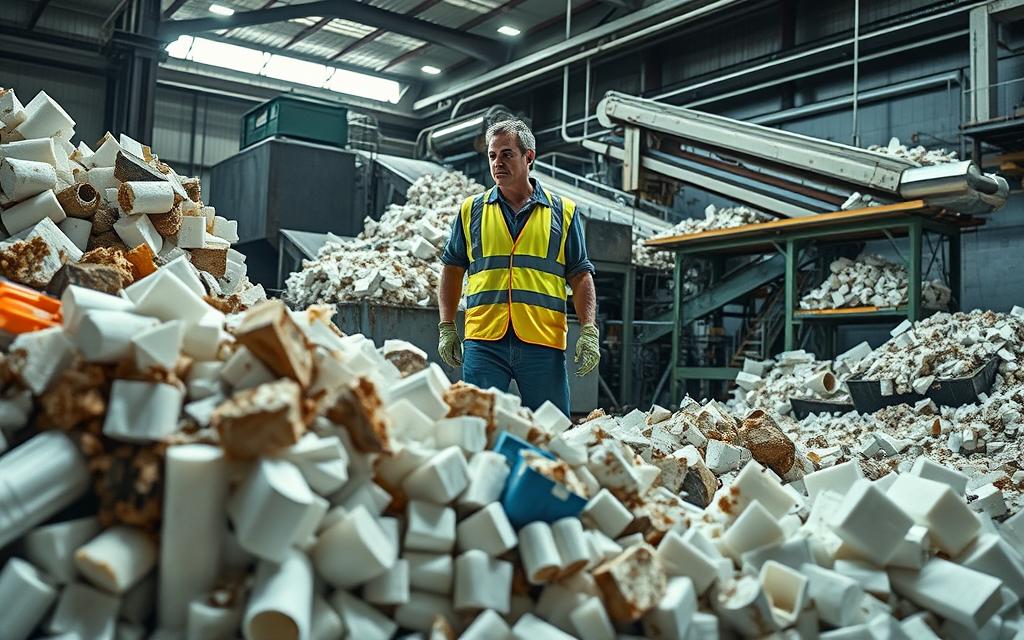
Science shows polystyrene can be broken down and made new again. Special places can process expanded polystyrene in different ways. But, these successes don’t often lead to big recycling programs.
The material’s very low density makes it hard to transport. A lorry full of polystyrene foam is mostly air, making it hard for towns to collect. The cost to process it is often more than what it’s worth.
Food contamination is another big problem. Most polystyrene food containers can’t be cleaned well enough for recycling. Rules about health stop recycled material from being used in new food products.
Key Challenges in Polystyrene Recycling Processes
The polystyrene recycling challenges go beyond just collecting it. Coloured or printed foam makes recycling harder. Different colours and additives need their own ways to be processed.
There’s not enough demand for recycled polystyrene. Companies prefer new material for its quality and lower cost. This lack of demand is a big EPS recycling problem.
Statistics show the harsh truth. Only about 5% of plastic waste is recycled in the US. For polystyrene, it’s even less because of these challenges.
| Challenge Type | Specific Issue | Impact on Recycling |
|---|---|---|
| Economic | High transport costs | Makes collection unprofitable |
| Technical | Food contamination | Limits recyclable material types |
| Market | Low demand for recycled EPS | Reduces economic viability |
| Regulatory | Food-grade restrictions | Prevents certain applications |
These issues mean we can’t recycle polystyrene easily. For most people and local governments, it’s not really recyclable through usual programs.
The gap between what’s possible and what’s practical shows we need better solutions. Without fixing these main problems, recycling polystyrene will keep being a big challenge.
Current Recycling Technologies and Methodologies
Polystyrene recycling is a big challenge, but new technologies are helping. These advanced methods are key to managing expanded polystyrene waste.
It’s important to know about these recycling methods. They range from mechanical compression to chemical treatments. Each has its own uses and limits.
Mechanical Recycling: Compression and Pelletisation
Mechanical recycling is a simple way to process EPS. It starts with collecting and sorting clean EPS. Then, it’s compressed to make it smaller.
The compressed EPS is ground and melted. This turns it into pellets for making new products. This EPS pelletisation process is valuable for many industries.
Key benefits of mechanical recycling include:
- It uses less energy than other methods
- It keeps the polymer’s structure intact
- It produces consistent quality recycled material
Chemical Recycling: Dissolution and Repolymerisation
Chemical recycling is another way to process polystyrene waste. It uses solvents to break down EPS foam into its liquid form. This reverses the process that made the original material.
This chemical recycling EPS method makes new polystyrene that’s almost as good as the original. The dissolved material is purified before being turned back into polystyrene.
Chemical dissolution has big advantages:
- It can handle contaminated materials
- It produces high-quality recycled resin
- It has the chance for closed-loop recycling
Advanced Thermal Conversion Techniques
Thermal conversion is the most advanced recycling method for polystyrene. Pyrolysis and gasification break down EPS at high temperatures without burning it. These processes turn waste polystyrene into useful chemicals or energy.
The thermal degradation happens without oxygen. This careful process lets us get styrene monomer and other valuable hydrocarbons.
Thermal conversion has many benefits:
- It can handle mixed or contaminated waste
- It has energy recovery possibilities
- It reduces the need for landfills
| Recycling Method | Process Temperature | Output Products | Energy Requirements |
|---|---|---|---|
| Mechanical Recycling | 180-220°C | EPS pellets | Low |
| Chemical Recycling | Room temperature to 150°C | Styrene monomer | Medium |
| Thermal Conversion | 400-800°C | Fuels and chemicals | High |
Each recycling method has its own benefits and challenges. The right choice depends on the material, available resources, and what you want to make.
These technologies are getting better, but we need more research and investment. Finding efficient recycling methods is key to managing polystyrene sustainably.
Municipal Recycling Programmes Across the UK
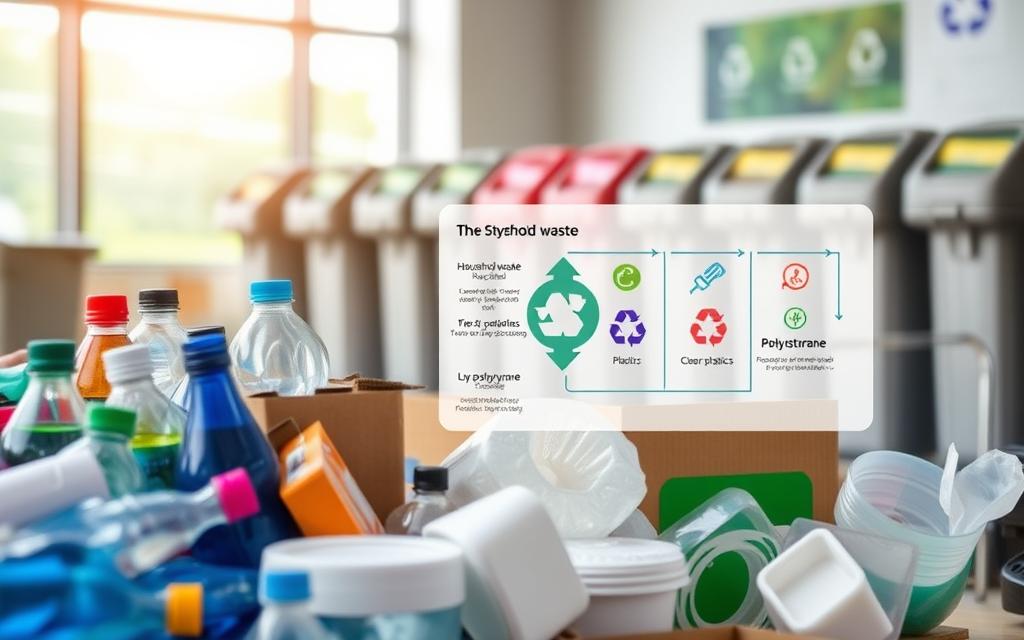
Understanding how different areas in the UK recycle polystyrene is key. The UK’s recycling of polystyrene varies a lot between councils. This creates a complex system that residents need to navigate carefully.
Many councils struggle with recycling polystyrene, even though it’s technically possible. Experts say that materials like EPS foam often have no market. This means many councils end up landfilling these materials, even though they collect them.
Variations in Local Authority Collection Policies
How councils treat polystyrene shows a lot of variety. Some councils take certain types of polystyrene in their collections. Others don’t accept any polystyrene at all.
This difference comes from a few things:
- What recycling facilities can handle
- If recycling polystyrene is profitable
- Local waste management deals
- Concerns about contamination
Even when councils do accept polystyrene, they often have rules. Some only take expanded polystyrene packaging. Others accept rigid containers but not foam. It’s important to check local guidelines.
How to Access Your Council’s Specific Guidelines
To find out what your council says about polystyrene, you need to look at official sources. Guessing or “wish-cycling” can mess up whole batches of recyclables. This can cause more harm than good.
Here’s how to get the right info:
- Go to your council’s website
- Look for the waste and recycling section
- Find the recycling guidelines document
- Check if it mentions polystyrene or plastic code #6
- If you’re unsure, contact waste services
Most councils give out recycling leaflets online or by post. These leaflets list what you can and can’t recycle. They help residents know what to do.
The table below shows how different councils handle polystyrene:
| Council Type | Polystyrene Acceptance | Common Restrictions | Alternative Options |
|---|---|---|---|
| Metropolitan Boroughs | Limited kerbside collection | No food-contaminated polystyrene | Designated recycling centres |
| County Councils | Mostly not accepted | All polystyrene forms prohibited | Household waste recycling sites |
| Unitary Authorities | Variable by region | Size and cleanliness requirements | Special collection events |
| District Councils | Rarely accepted | No foam packaging materials | Commercial recycling programmes |
Council recycling policies can change often. New market trends, technology, and rules can affect what they accept. It’s good to check regularly to stay up to date.
If you’re unsure about recycling something, contact your council’s waste team. They can give you the latest on recycling polystyrene in your area. This helps you make choices that are good for the environment.
Specialised Recycling Schemes and Drop-off Points
Specialised recycling initiatives offer targeted solutions for polystyrene waste. They cater to specific needs, providing alternative disposal paths when regular services are not enough.
Designated Collection Centres and Facilities
In the UK, some household waste recycling centres accept expanded polystyrene at EPS drop-off points. These centres are dedicated to collecting clean polystyrene materials, preventing them from going to general waste.
Private recycling companies also have collection points for polystyrene products. They handle large volumes from both homes and businesses. Always check the acceptance policies before visiting, as they can vary.
Some retailers have take-back programmes for polystyrene packaging. Electronics stores and furniture outlets might accept packaging from their products. This approach ensures the recycling of materials originally distributed by the company.
Postal and Mail-back Recycling Services
Mail-back recycling services are now available for polystyrene disposal. They allow users to send clean EPS materials to processing facilities via postal services.
Users buy boxes designed for polystyrene shipment. The cost covers transport and processing, making it good for those without local recycling options. This service shows how technology can help recycling across different areas.
Many environmental organisations offer mail-back programmes. They provide educational materials on how to prepare and package materials for recycling.
Commercial and Business Recycling Programmes
Businesses with a lot of polystyrene waste can use business waste recycling programmes. These services are tailored to the volume and frequency of waste, operating on a contractual basis.
Companies like electronics manufacturers and construction firms use these programmes. They get regular collections and documented recycling processes, supporting their sustainability efforts. These services are the most efficient for large-scale recycling.
Commercial recycling providers offer full waste management solutions. They handle collection, transport, processing, and certification of recycling. Businesses can choose services based on their needs and environmental goals.
| Recycling Option | Suitable For | Cost Considerations | Access Requirements |
|---|---|---|---|
| Designated EPS Drop-off Points | Households & small businesses | Often free or minimal fee | Check local facility policies |
| Mail-back Recycling Services | Individuals without local options | Pay-per-box system | Online registration available |
| Commercial Recycling Programmes | Businesses with regular waste | Contract-based pricing | Volume requirements may apply |
Each recycling option meets different needs in waste management. From EPS drop-off locations to business waste recycling contracts, these programmes show the growth of polystyrene recycling solutions.
Proper Preparation of Polystyrene for Recycling
To recycle polystyrene well, you must prepare it carefully. This ensures it’s good for processing and keeps other materials clean. It’s all about avoiding contamination.
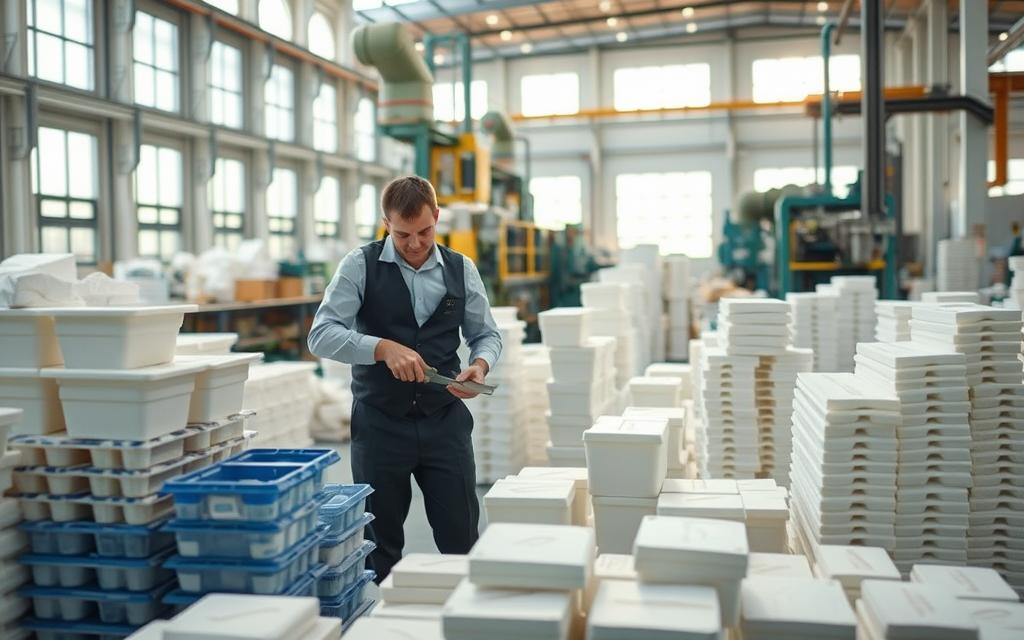
Cleaning, Sorting and Contaminant Removal
Cleaning polystyrene is key for recycling. Use mild soap and water to get rid of food, dirt, and other stuff. Make sure it’s dry before you move it.
Try to sort different types of polystyrene apart. This helps remove contaminants. Even a bit of dirt can ruin the recycling process.
Label and Adhesive Removal Techniques
Take off any labels or tape gently. A hairdryer can help soften adhesives. Then, use citrus-based solvents to clean up any glue left behind.
Don’t use strong chemicals that could harm the material. Removing adhesives properly keeps the polystyrene clean. This is important for quality.
Storage and Transportation Best Practices
Keep the polystyrene in dry, safe places to stop it from breaking. Protect it from moisture and dust until you move it. If it’s too big, break it into smaller pieces.
When you’re moving it, make sure it’s secure. Use bags or boxes to keep small bits together. Handle it carefully to keep it in good shape until it gets to the recycling place.
Environmental Consequences of Polystyrene Waste
Polystyrene waste has a big impact on the environment. It harms ecosystems and contributes to global warming. Its chemical makeup and slow breakdown pose dangers to both land and sea.
Landfill Capacity and Long-term Decomposition
Polystyrene takes up a lot of space in landfills because it doesn’t break down quickly. It can last for centuries, unlike organic waste that breaks down in years. This leads to a big problem with EPS landfill space.
Because it’s light but takes up a lot of space, it uses up landfill space fast. This means we need more landfills, which harms habitats and faces opposition from communities. The costs of these landfills are a hidden burden on society.
Marine Pollution and Impact on Aquatic Life
Polystyrene waste often ends up in oceans, breaking into smaller pieces. These pieces are part of the microplastics pollution problem in oceans worldwide.
Sea creatures think these pieces are food, which can harm them. The material also absorbs pollutants, making them toxic to the food chain. This can lead to diseases in animals and humans who eat seafood.
Carbon Emissions Throughout the Lifecycle
The polystyrene environmental impact starts with its production. Making polystyrene from petroleum-based materials is energy-intensive and emits a lot of greenhouse gases. This is before any products are even sold.
Transporting polystyrene also adds to emissions. Its bulk means more shipments and bigger vehicles, using more fuel. This increases carbon emissions in the supply chain.
At the end of its life, polystyrene’s emissions don’t stop. Incineration or landfill breakdown both release harmful gases. This continues to contribute to climate change long after use.
Economic Aspects of Polystyrene Recycling
Polystyrene recycling faces big financial hurdles. It’s technically possible but often not worth it for many groups. The costs don’t match up.
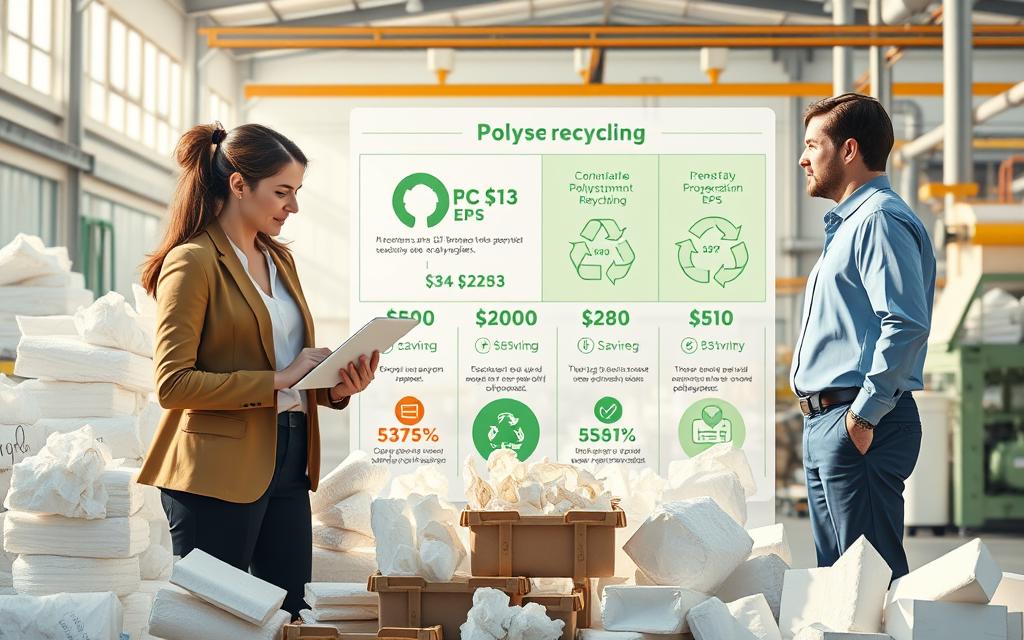
Cost Analysis for Local Authorities and Businesses
The cost of recycling EPS is a big problem. Polystyrene foam is light but takes up a lot of space. This makes it expensive to transport.
It also costs a lot to process. Special machines are needed, which are pricey. Many places lose money on polystyrene recycling.
“The economics of polystyrene recycling remain challenging due to high collection and processing costs relative to the value of the recycled material.”
Businesses also struggle with the costs. Here’s a comparison of costs:
| Cost Factor | Polystyrene Recycling | Traditional Recycling | Landfill Disposal |
|---|---|---|---|
| Collection & Transport | High (bulky material) | Medium | Low |
| Processing Equipment | Specialised & costly | Standardised | N/A |
| End Product Value | Low market demand | Stable market | No value |
| Long-term Liability | Minimal | Minimal | Environmental costs |
Market Dynamics for Recycled Polystyrene Products
The recycled polystyrene market faces big challenges. Companies often choose new material for its quality and cost. Recycled polystyrene is pricier and may vary slightly.
There are few uses for recycled polystyrene. It’s used in some products like picture frames and office supplies. But demand is not high enough to support more recycling.
Quality issues also play a part. If the material gets contaminated, it’s not good enough for food packaging. This makes companies wary of using it.
Government Funding and Support Programmes
Many government grants waste programmes help with recycling. They try to make it more affordable for everyone.
There are different kinds of help:
- Grants for recycling facilities
- Tax breaks for using recycled materials
- Money for new recycling technologies
- Programmes that make companies responsible for waste
Recent studies show these efforts can help. But, funding is not always consistent. This makes progress uneven.
To really make a difference, we need better technology, more demand for recycled products, and ongoing government support. This will help create a strong recycling system.
Sustainable Alternatives to Polystyrene Packaging
As worries about polystyrene grow, people and businesses look for sustainable alternatives to styrofoam. They want something that protects well but is kinder to the planet. Now, there are many new options that meet these needs.
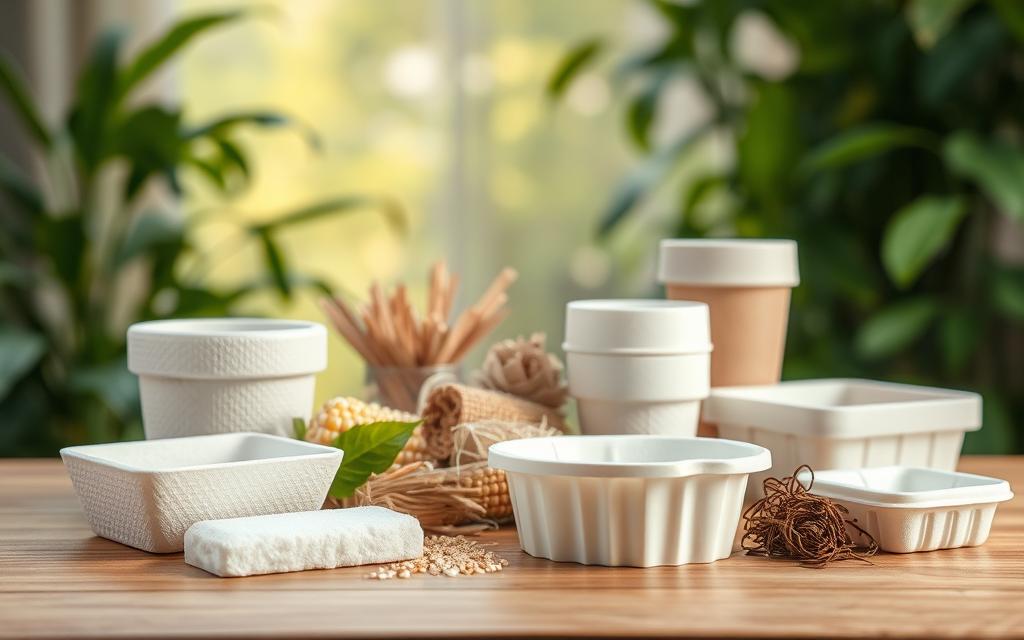
Biodegradable and Compostable Material Options
Biodegradable packaging is a big step forward in green materials. It breaks down into nothing but organic stuff when composted. Cruz Foam leads the way with compostable foam made from natural stuff.
These foams come from plants like:
- Moulded pulp from farm waste
- Mycelium (mushroom roots)
- Seaweed and other sea stuff
- Corn starch and other plant stuff
Cruz Foam’s tech is a natural solution. It’s “packaging made by nature, dissolved by nature.” It’s great for keeping things safe and fully composts in big facilities.
Reusable Container Systems and Solutions
Reusable containers are the best way to avoid waste. They’re tough, get cleaned, and used many times before recycling.
Reusable systems offer big benefits like:
- Less waste overall
- Save money in the long run
- Look good to customers for caring about the planet
- Keep things safe better than usual
Smart companies use deposit schemes or subscriptions for returning packaging. This way, they cut down waste to almost zero.
Paper-based and Other Eco-friendly Substitutes
Paper packaging has come a long way. Now, it’s not just cardboard boxes. Modern paper solutions are strong, recyclable, and often compostable.
New paper options include:
- Corrugated cardboard with special honeycomb inside
- Moulded fibre for custom shapes
- Paper foam for cushioning
- Water-resistant treated paper
These materials are good for the planet and protect what you send. Here’s a table showing the main features of sustainable alternatives to styrofoam:
| Material Type | Compostability | Recyclability | Protection Level | Cost Comparison |
|---|---|---|---|---|
| Compostable Foam | Industrial composting | Not typically recycled | Excellent | 20-30% higher |
| Moulded Pulp | Home compostable | Widely recyclable | Good to excellent | 10-20% higher |
| Reusable Containers | Not applicable | After many uses | Excellent | Higher initial cost |
| Paper-based Cushioning | Most are compostable | Widely recyclable | Good | Similar cost |
| Mycelium Packaging | Home compostable | Not typically recycled | Very good | 25-40% higher |
Switching to sustainable alternatives to styrofoam is a must for the planet and a chance for businesses to lead. As more people choose eco-friendly options, companies that use biodegradable packaging will be at the forefront of a greener future.
Legislative Framework and Policy Developments
Governments around the world are getting tough on plastic pollution. Polystyrene products are under special watch. The rules are changing fast as people see the harm single-use plastics cause. We’ll look at the current rules, who’s responsible for waste, and what’s coming next for polystyrene.
Current Bans and Usage Restrictions
Many places have banned polystyrene, like cups and containers. This is to cut down on pollution. The fight against single-use plastics is growing everywhere.
In the US, some states and cities have their own rules against polystyrene. These rules mainly target food items where there are good alternatives. Here’s a table showing where these bans are in place:
| Jurisdiction | Banned Products | Implementation Date | Exemptions |
|---|---|---|---|
| New York City | Food containers, cups, packing peanuts | January 2019 | Pre-packaged foods, raw meat trays |
| Maine | Food service containers | January 2021 | Non-profits, healthcare facilities |
| Maryland | Food service products | July 2020 | Schools until 2023 |
| Seattle | Food service ware | July 2010 | Emergency situations |
| Vermont | Food containers, cups | July 2021 | Non-profits, raw meat packaging |
Many places are trying to make their waterways clean. But, they face challenges because polystyrene is not banned everywhere. More and more places are banning polystyrene because of growing concerns about plastic pollution.
Extended Producer Responsibility Initiatives
Extended Producer Responsibility (EPR) is a big change in how we handle waste. It makes companies pay for the whole life of their packaging. This encourages them to make packaging that’s easier to recycle or reuse.
The idea behind EPR legislation is simple but powerful. The companies that make packaging should pay for it after we use it. This makes them want to make packaging that’s better for the environment. Some states are thinking about making EPR laws for all packaging materials.
EPR rules vary a lot. Some focus on plastic, while others cover all packaging. How well these work depends on how they’re set up and enforced.
Companies are starting to use different materials and design their packaging better because of EPR. This is a big step forward in how we manage waste. For the latest on packaging policy, check out comprehensive policy news resources.
Future Regulatory Trends and Projections
The rules on plastics are changing fast, with new trends emerging. Policymakers are looking at bigger changes that could change how we make and use plastics. These changes will likely make us use less of harmful materials like polystyrene.
New rules might include taxes on new plastic to encourage using recycled plastic. There could be stricter rules on how packaging is designed to make it easier to recycle. This would hit materials like polystyrene hard because they’re hard to recycle.
More places might ban single-use plastics altogether. This could include not just food items but other types of packaging too. The trend is clear: we’re going to use less plastic and make more of it reusable.
International agreements are also playing a big role in shaping plastic policies. Global deals could set standards for polystyrene production and use worldwide. These efforts are the next big step in tackling plastic waste.
Businesses and consumers need to get ready for more changes in plastic packaging rules. The trend is towards using materials that are better for the environment and can be recycled. Keeping up with these changes is key to adapting to the new rules.
Conclusion
Recycling polystyrene is possible but faces big challenges. It’s expensive, hard to manage, and not many want it. For most people, recycling polystyrene is not easy.
Polystyrene waste harms the environment a lot. It takes up space in landfills for ages, pollutes oceans, and releases harmful gases. We need many solutions to fix this problem.
To help, we should use less polystyrene. Choose items that can be composted or reused instead. Also, support efforts that help the planet and push for laws that protect it.
The future of EPS looks uncertain but hopeful. New recycling methods and laws could help. If we all become more aware and take action, we can make a difference.
FAQ
Is polystyrene the same as Styrofoam?
No, polystyrene is a type of plastic, while Styrofoam is a brand of insulation. Styrofoam is not all foam cups and packaging, which are usually made from a different type of plastic.
Can polystyrene be recycled in the UK?
Polystyrene can be recycled, but it’s not easy in the UK. Most councils don’t collect it because it’s expensive to transport. You might find special places to drop it off, but it depends on where you live.
What are the main barriers to recycling polystyrene?
Recycling polystyrene is hard because it’s light and costs a lot to move. It also gets dirty easily and there’s no market for the recycled plastic. Plus, it can’t be used in food packaging because of safety rules.
How can I find out if my local council recycles polystyrene?
Check your council’s website or waste management guides. They tell you what they accept. It’s important to follow these rules to keep other recyclables clean.
Are there any alternatives to polystyrene packaging?
Yes, there are green options like compostable materials and reusable containers. Companies like Cruz Foam are making eco-friendly packaging.
What environmental issues are associated with polystyrene waste?
Polystyrene fills up landfills and lasts for centuries. It also breaks down into tiny plastic pieces that harm the environment. Making and moving polystyrene also pollutes the air.
Are there any bans on polystyrene products in the UK?
There’s no UK-wide ban, but some places have rules against single-use polystyrene. The government is thinking about more rules to cut down on polystyrene.
What should I do with polystyrene if it cannot be recycled locally?
If you can’t recycle it, try to use less polystyrene. Reuse clean packaging or throw it away as a last choice. For big amounts, look for special recycling programs or postal services that take it.
How is polystyrene recycled when facilities are available?
Recycling polystyrene involves different methods like pressing it into pellets or breaking it down with chemicals. These steps need clean, pure material to work well.
What role do businesses play in polystyrene recycling?
Big companies that use a lot of polystyrene can recycle it through commercial programs. The government is also making companies responsible for their packaging waste.

 By
By
 By
By