
Welcome to your journey towards a greener lifestyle. Many people feel overwhelmed when starting their sustainability practices. This guide makes it simple and accessible for everyone.
Proper waste management is more than just sorting bins. It shows we care about our planet’s health. Every small action helps the environment a lot.
We’ll show you how simple it is to make a difference. Our guide will give you both knowledge and confidence. It’s your chance to change your daily habits.
Taking responsibility for what we consume is key now. Together, we can make a big, positive change for the future.
What Exactly is Recycling?
Many people think recycling means just sorting waste into bins. But it’s more than that. It’s a material recovery system that turns old items into new resources. This way, materials get a second life, helping our planet and society.
“One of the most impactful ways individuals and communities can contribute to a healthier planet is through recycling.”
The Basic Concept of Material Recovery
Material recovery is the heart of recycling. It collects, processes, and turns waste into new products. This reduces the need for raw materials, saves energy, and protects the environment.
This method keeps resources in use, not waste. It helps save natural resources and eases the pressure on our planet.
Different Types of Recycling Processes
Recycling isn’t a one-size-fits-all solution. Each material needs its own way to be recycled. Knowing this helps us see the effort behind recycling programs.
Mechanical recycling
Mechanical recycling is common for plastics, paper, and metals. It sorts, cleans, shreds, and melts materials to make new products.
This method works best for clean, single-material items. It’s efficient and keeps the material’s structure intact.
Chemical recycling
Chemical recycling breaks down plastics into their basic parts. It’s for plastics that mechanical recycling can’t handle.
Through methods like pyrolysis, complex plastics are turned into basic chemicals. These can then make new plastics as good as the original.
Organic recycling
Organic recycling deals with food waste and yard trimmings. It uses microorganisms to break down these items into compost.
Composting is the oldest recycling method. It returns nutrients to the soil and cuts down methane from landfills.
| Recycling Type | Materials Processed | Key Advantages | Common End Products |
|---|---|---|---|
| Mechanical | Plastics, paper, metals | Energy efficient, maintains material integrity | New containers, packaging materials |
| Chemical | Mixed plastics, complex materials | Handles contamination, produces virgin-quality materials | New plastics, chemical feedstocks |
| Organic | Food waste, yard trimmings | Natural process, creates soil nutrients | Compost, soil amendments |
Each recycling method is vital for managing waste. Knowing about these processes helps us make better choices in our daily lives.
Why Your Recycling Efforts Matter
Many people ask if recycling really makes a difference. The answer is yes. Every item you recycle helps a lot. It’s part of a big system that makes a big change.
Environmental Impact and Conservation
Recycling helps our planet by saving raw materials. Making products from recycled materials is better for the environment. It saves forests, cuts down water use, and protects habitats.
Landfills are a big problem. The US throws away millions of tons of waste every year. Recycling keeps materials out of landfills, saving space and preventing pollution.
Economic Benefits of Recycling Programmes
Recycling is good for the economy too. It creates jobs in many areas:
- Collection and transportation services
- Sorting facility operations
- Processing and manufacturing plants
- Research and development positions
Communities save money by recycling. It’s cheaper than sending waste to landfills. This means more money for other important services.
Energy Savings and Carbon Reduction
Recycling uses less energy than making new materials. This means less greenhouse gas emissions. For example, recycling aluminium cans saves a lot of energy.
Recycling many materials saves energy and cuts carbon emissions:
- Paper recycling reduces air pollution by 74%
- Glass recycling lowers related air pollution by 20%
- Plastic recycling can save up to 80% of energy compared to new production
These savings help fight climate change. As Carus says:
Together, we can make a positive impact and create a more sustainable world for all.
Your recycling helps the planet and supports local benefits. Every item you recycle is a step towards a better future.
The Complete Recycling Journey
Ever wondered what happens to your recyclables after they’re collected? It’s a complex journey that turns waste into valuable resources. This process is all about sustainable waste management.
Collection and Transportation
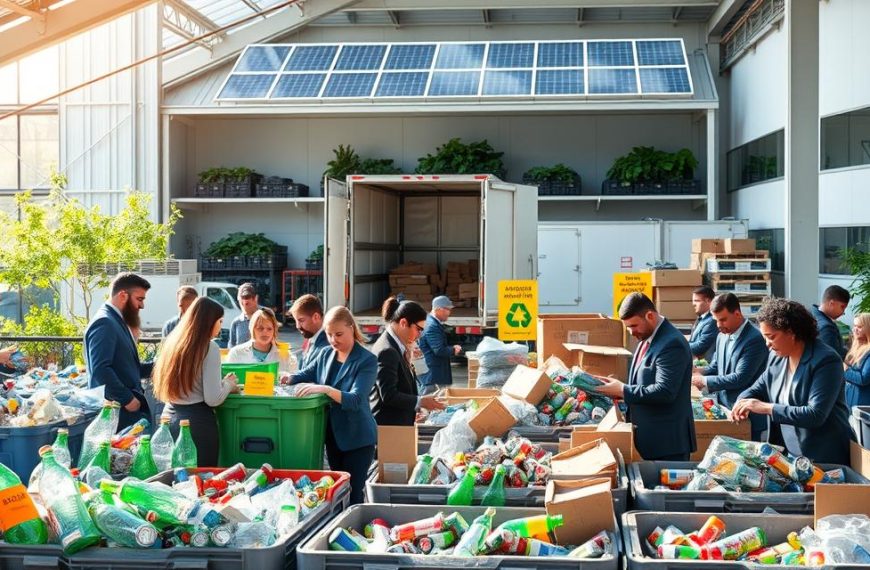
Municipal trucks pick up recyclables from your kerbside bins on set days. They then take these materials to special facilities called Materials Recovery Facilities (MRFs). This step is all about moving materials efficiently without harming the environment.
Some places use single-stream collection, where all recyclables go together. Others sort materials from the start using multi-stream systems.
Sorting and Processing Facilities
At MRFs, materials are sorted in detail. Workers remove obvious contaminants. Then, conveyor belts sort items further.
Magnets pull out steel cans. Optical scanners use infrared to sort plastics. Air classifiers separate paper from heavier items. This ensures materials are good enough for manufacturers.
Manufacturing and Repurposing
Sorted materials are baled and sold to makers. Here, they become raw materials for new products. Paper becomes cardboard, and glass is crushed for new bottles.
Plastics are washed and turned into pellets for new containers. Aluminum is melted into sheets for cans. This gives materials a new life and saves natural resources.
Return to Consumer Markets
New products made from recycled materials hit store shelves. Consumers buy these sustainable goods, completing the cycle. Many products now show how much recycled content they have.
This closed-loop system shows the power of circular economics. Your recycling efforts help improve recycling tech and support recycled materials in the market.
Setting Up Your Home Recycling Station
Setting up a home recycling system needs careful planning. It should be easy for everyone in your home to use. This helps avoid any mess or contamination.
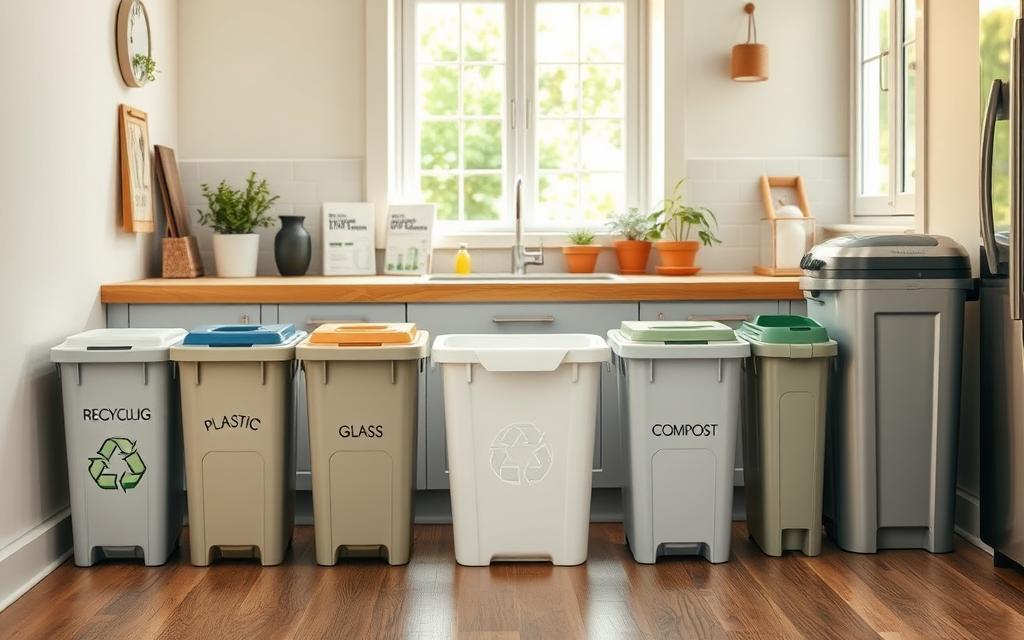
Choosing the Right Bins and Containers
Choosing the right bins is key to a good recycling system. Think about how much waste your home makes and how much space you have.
Size and capacity considerations
Choose bins that fit your recycling needs. Smaller bins are good for kitchens, while bigger ones work for garages or utility rooms.
Bin sizes range from 10 litres for kitchens to 60 litres for bigger homes. Don’t fill bins too much, as it can make sorting hard.
Labeling systems for clarity
Clear labels are important to avoid confusion. Use words and symbols, which help everyone understand, including kids.
Colour-coded bins are great – use blue for paper, green for glass, and so on. This makes sorting easier for your family.
Ideal Location for Your Recycling Centre
Put your recycling station where it’s easy to reach every day. The kitchen is often the best spot because it’s where most waste comes from.
If you have room, set up a second station in your garage or utility room. This is good for overflow or less common items. Easy access helps everyone recycle more.
Creating a Family Recycling Routine
Make recycling a regular part of your routine. Pick specific days for recycling, like taking bins out.
Get kids involved in recycling to teach them about the environment. Make recycling a part of your daily cleaning routine.
It’s also important to teach everyone to rinse containers before recycling. This includes glass bottles and jars.
Common Recyclable Materials and How to Handle Them
Knowing how to handle recyclable materials is key to helping the recycling process. Each type needs a special way to prepare it. This helps recycling work better and keeps facilities clean.
Paper and Cardboard Products
Paper is a top recyclable material. It’s important to keep it dry and free from food stains.
Newspapers and magazines
Keep newspapers and magazines dry and in your recycling bin without plastic wrapping. Glossy magazines might be okay, but check your local recycling rules.
Cardboard boxes and packaging
Flatten cardboard boxes to save space. Remove packing materials like foam or plastic. If pizza boxes are not too greasy, you can recycle them.
Glass Containers and Bottles
Glass can be recycled endlessly. Handling it right keeps workers safe and keeps the material valuable.
Colour separation requirements
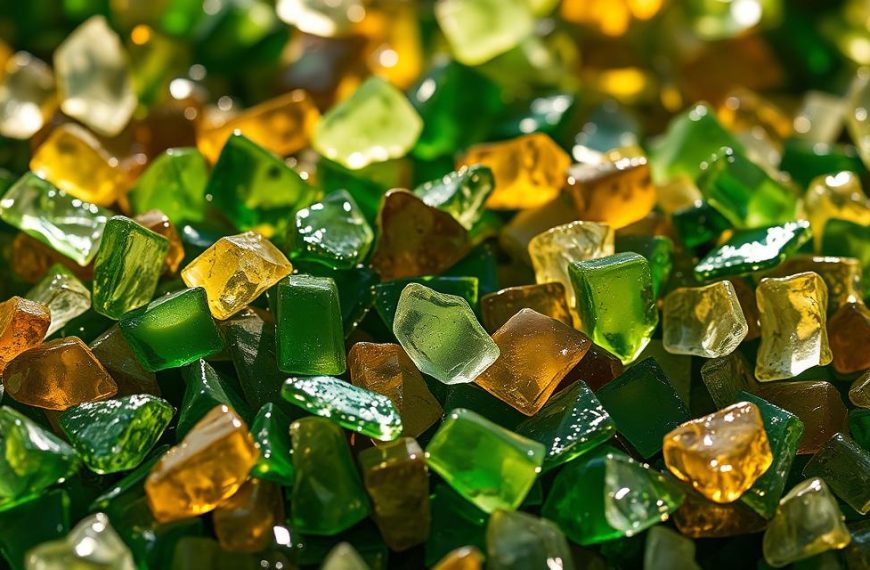
Some places need you to sort glass by colour. Others accept mixed glass. Always check your local recycling rules. Sorting by colour helps make better recycled glass products.
Handling broken glass safely
Wrap broken glass in newspaper or put it in a cardboard box. Label it “broken glass.” Don’t put loose glass in your recycling bin as it’s dangerous for workers.
Plastic Materials and Containers
Plastic recycling depends on resin codes and local rules. Not all plastics can be recycled, and it varies a lot.
Understanding plastic resin codes
The recycling symbol on plastics shows the resin type with a number (1-7). Here’s a quick guide to common codes:
| Resin Code | Plastic Type | Common Examples | Recyclability |
|---|---|---|---|
| #1 | PET/PETE | Water bottles, food containers | Widely accepted |
| #2 | HDPE | Milk jugs, detergent bottles | Commonly recycled |
| #5 | PP | Yoghurt pots, bottle caps | Increasingly accepted |
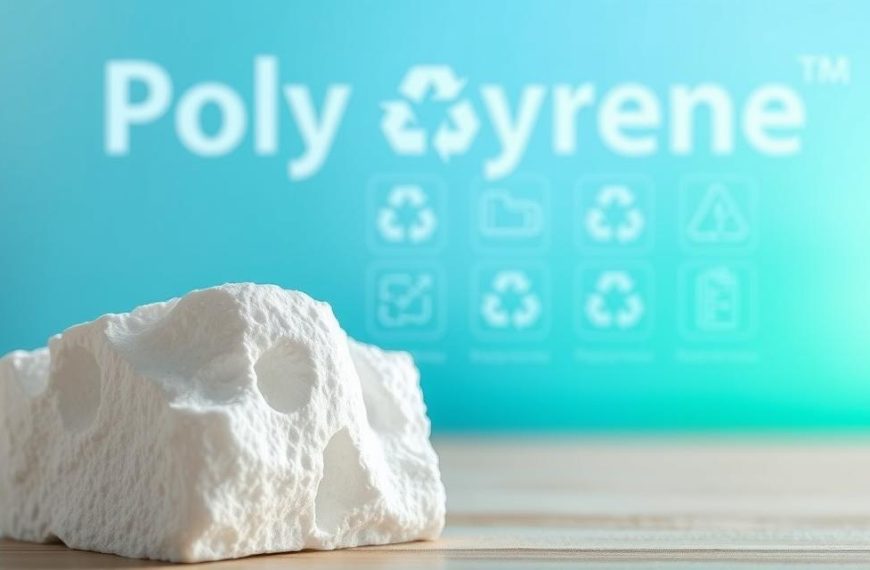
| #6 | PS | Foam packaging, disposable cups | Rarely recycled |
Which plastics are commonly accepted
Most recycling programs accept #1 (PET) and #2 (HDPE) plastics. Rinse containers and remove caps unless your local program says not to. Recycling plastics properly can turn them into new products like clothes or building materials.
Metal Cans and Foil Products
Metals can be recycled endlessly, making them very valuable. Preparing them right helps them move smoothly through recycling.
Aluminium versus steel cans
Aluminium and steel cans are recyclable but might be processed differently. A magnet test can tell them apart. Most programs accept both together.
Preparing metal items for recycling
Rinse metal containers to remove food. Labels are okay to leave on as they’re removed later. Clean and ball aluminium foil to prevent losing small pieces during sorting.
Recycling rules can differ by location. Always check with your local recycling program for specific guidelines. Proper preparation helps your recycling efforts contribute to the circular economy.
Materials That Don’t Belong in Your Recycling Bin
Knowing what doesn’t go in your recycling bin is as important as knowing what does. Many people accidentally put items in the recycling bin that can mess up the whole process. These recycling contaminants can cause big problems at recycling plants.
Common Contaminants to Avoid
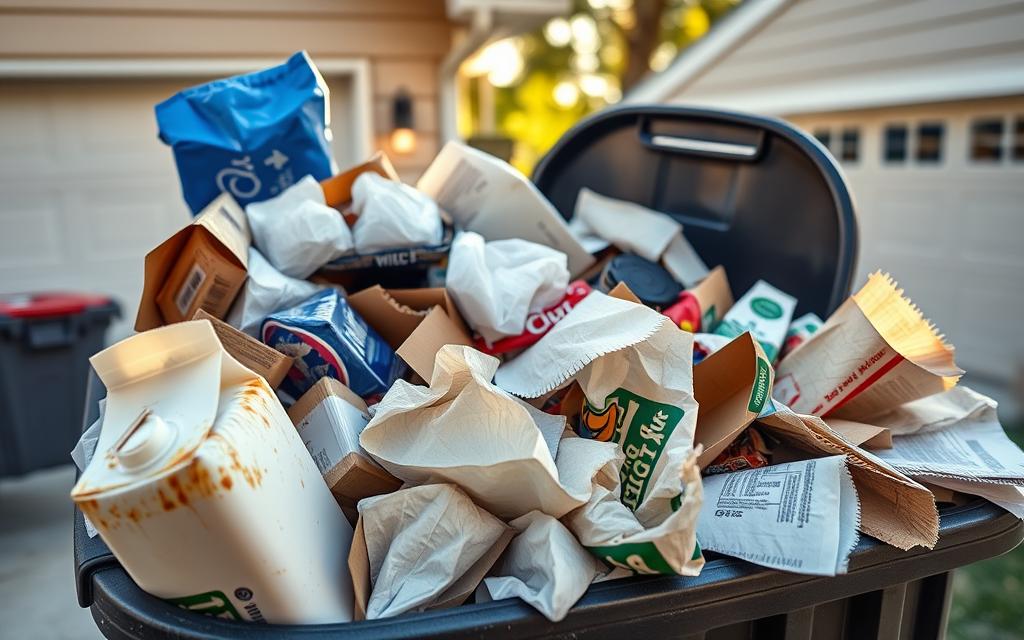
Some items seem like they can be recycled but actually cause big problems. They can get stuck in machines or make recycled materials less valuable.
Food-soiled paper products
Things like greasy pizza boxes and food-stained paper plates can’t be recycled. The grease and food mess up the paper, making it bad for recycling. Even a little bit of food waste can ruin a whole batch of paper recycling.
Certain types of plastic wrap
Plastic films, shopping bags, and cling wrap shouldn’t go in your recycling bin. They get stuck in machines, causing problems and damage. Most recycling programs can’t handle these flexible plastics well.
Hazardous Household Materials
Some household items are dangerous for recycling workers and machines. They need special care and disposal.
Batteries and electronic waste
Batteries can start fires in recycling trucks and plants. Lithium-ion batteries are very dangerous when broken. Electronic devices have heavy metals that can harm the environment if not disposed of right.
Chemicals and cleaning products
Containers with chemicals can react with other materials or release harmful fumes. Even empty containers can have enough left to mess up recycling. Always check local rules for disposing of hazardous waste.
Why Contamination Matters
Recycling contamination has big effects beyond just your bin. Non-recyclable items can:
- Damage expensive sorting equipment
- Make recycling work unsafe for workers
- Send whole truckloads of recyclables to landfill
- Make recycling more expensive
- Lower the quality and value of recycled materials
Experts say:
Avoid putting non-recyclable items like plastic bags, styrofoam, and hazardous materials in the recycling bin. These can mess up recycling and cause problems.
Sorting things right stops these recycling contaminants from ruining recycling efforts. If unsure, it’s safer to leave it out than risk ruining the whole batch.
Proper Preparation Techniques
Learning to recycle starts with knowing how to prepare your materials right. These steps help your items go through recycling smoothly. They prevent contamination and processing problems.
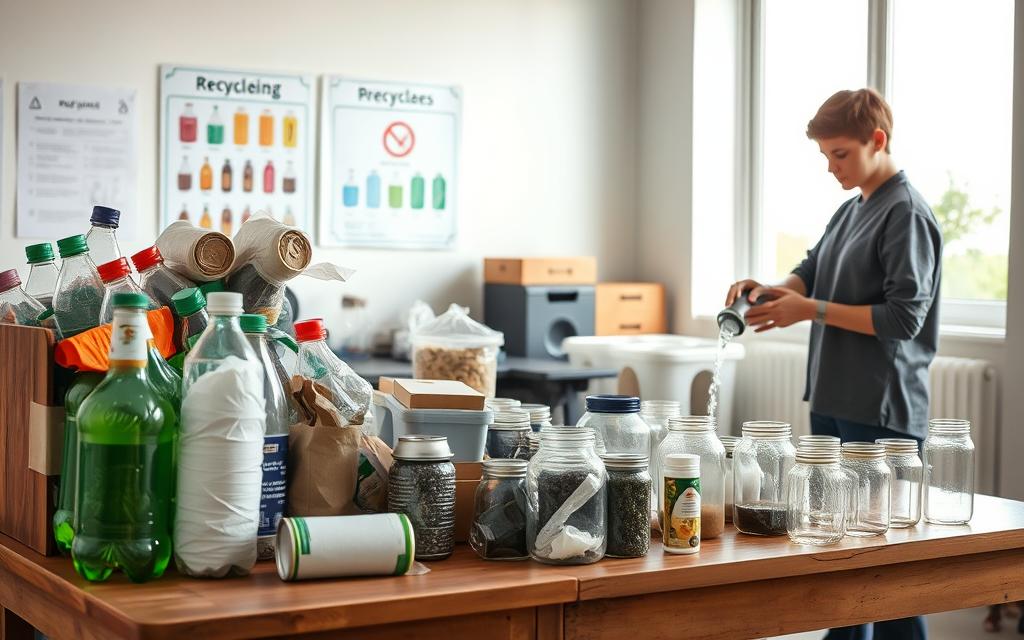
Cleaning and Rinsing Guidelines
Cleaning stops food residue from mixing with other materials. Most recycling places want containers without big food bits.
How clean is clean enough?
A simple rinse is usually enough for most containers. You don’t need to sterilise them. Just get rid of any visible food. Jars with peanut butter or mayonnaise need a deeper clean than water bottles.
Water conservation tips
Save water by rinsing containers in dishwater. Use leftover water or rainwater for cleaning recyclables. This saves water and helps the environment.
Removing Labels and Lids
Whether to remove labels and lids depends on local recycling rules. Some places want lids off, while others are okay with them on.
When to remove versus when to keep
Check local rules for specific instructions. Usually, take off lids from glass jars and plastic bottles. Metal lids can stay on metal cans if they’re crimped.
Flattening and Compacting Materials
Flattening and compacting materials helps recycling work better. It makes collection and transport easier.
Space-saving techniques
Flatten cardboard boxes fully before recycling. Crush aluminium cans gently to save space. Stack similar materials together to fill bins better.
When not to compact items
Don’t crush plastic bottles and containers. Sorting places use technology that needs items to be whole. Glass should never be squashed for safety reasons.
| Material Type | Cleaning Required | Lid Handling | Compaction Advice |
|---|---|---|---|
| Plastic Containers | Light rinse | Remove if small | Do not crush |
| Glass Jars | Thorough cleaning | Remove metal lids | Never compact |
| Cardboard Boxes | No food residue | N/A | Flatten completely |
| Aluminium Cans | Quick rinse | Can remain attached | Gently crush |
| Metal Food Cans | Thorough cleaning | Can remain attached | Do not crush |
These preparation steps greatly improve recycling. Well-prepared materials cut down on contamination and boost the value of recycled goods.
Understanding Recycling Symbols and Codes
Recycling can seem like a new language, with many symbols and codes. These symbols tell us about materials and their impact on the environment. But, they can be confusing. Knowing them helps us make better recycling choices and avoid mistakes.
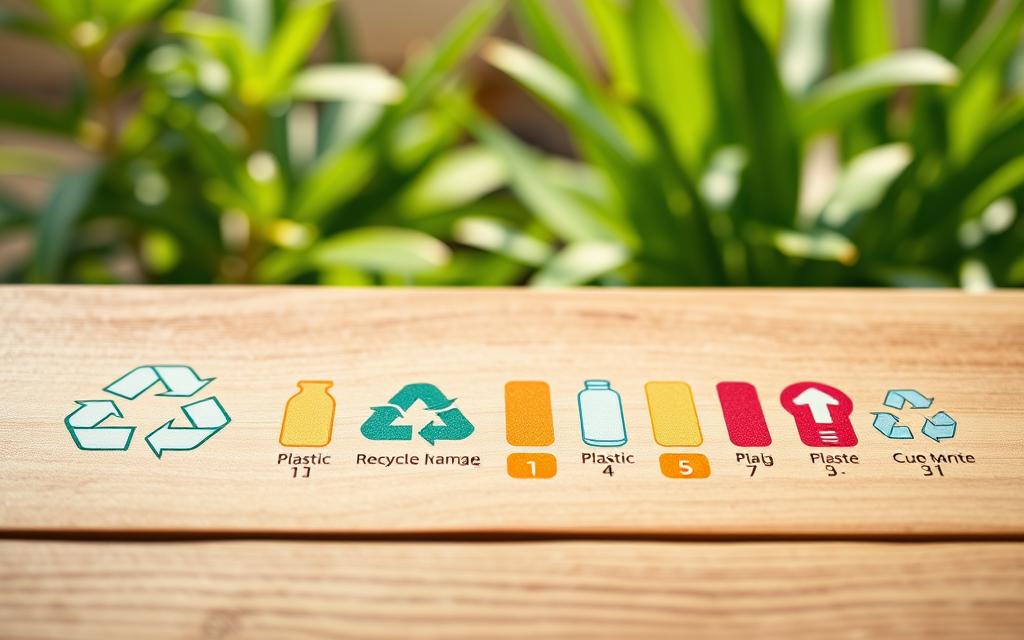
The Mobius Loop and Its Variations
The Mobius loop is a well-known recycling symbol. It looks like three arrows in a triangle. This symbol means a product can be recycled.
But, there are different versions of this symbol. If the Mobius loop has a number in the middle, it shows how much of the product is made from recycled materials. This is important, but it doesn’t mean the item can be recycled where you live.
Resin Identification Codes Explained
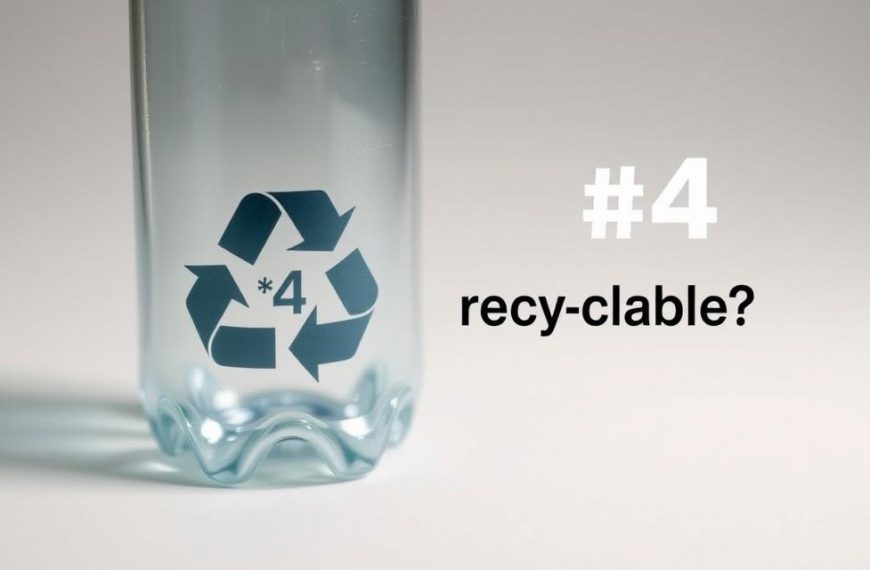
The numbered triangle system is called Resin Identification Codes (RIC). It’s mainly found on plastic products. These codes range from 1 to 7 and tell us what kind of plastic is used.
Critical reminder: These numbers only tell us the type of plastic, not if it can be recycled. Check with your local recycling program to see if they accept certain plastics. Don’t assume all plastics with numbers can go in your recycling bin.
| RIC Code | Plastic Type | Common Examples | Recyclability Notes |
|---|---|---|---|
| 1 | PET/PETE | Water bottles, food containers | Widely accepted by most programmes |
| 2 | HDPE | Milk jugs, detergent bottles | Commonly recycled in many areas |
| 3 | PVC | Piping, shrink wrap | Rarely accepted in curbside recycling |
| 4 | LDPE | Squeeze bottles, plastic bags | Often requires special drop-off locations |
| 5 | PP | Yogurt containers, bottle caps | Increasingly accepted in many programmes |
| 6 | PS | Foam packaging, disposable cups | Seldom recycled due to contamination risks |
| 7 | OTHER | Mixed plastics, bioplastics | Check locally as acceptance varies widely |
Other Environmental Symbols to Recognise
There are other symbols on packaging too. The “compostable” symbol means products can break down in industrial composting. But, they shouldn’t go in home compost bins or regular recycling.
The Green Dot symbol is often mistaken for recycling. It actually means the manufacturer has paid into a packaging recovery organisation in Europe. It doesn’t mean the product is recyclable or made from recycled materials.
You might also see the “Tidy Man” symbol, which encourages proper disposal. There are also marks for sustainable forestry or organic materials. Knowing these symbols helps us avoid mistakes and supports local recycling efforts.
Avoiding Common Recycling Mistakes
Even the most eco-conscious people can make recycling mistakes. These mistakes can harm the environment instead of helping it. Knowing these errors helps make sure your recycling efforts are effective.
The “Wishcycling” Problem
Many people do “wishcycling” by putting non-recyclable items in recycling bins. They hope they might be recyclable. This practice causes big problems at recycling facilities.
What it is and why it’s harmful
Wishcycling happens when people put items in recycling bins without knowing if they can be recycled. These items can:
- Damage sorting machinery and equipment
- Contaminate entire batches of recyclable materials
- Increase processing costs significantly
- Create safety hazards for facility workers
If you’re unsure, it’s safer to throw items in the general waste. This avoids contaminating recyclables.
Plastic Bag Confusion
Plastic bags are a common recycling mistake. Many think they can go in curbside recycling. But, this causes big problems.
Why they don’t belong in curbside bins
Plastic bags get tangled in sorting machinery. This leads to:
- Frequent shutdowns for maintenance
- Expensive repairs and downtime
- Potential injury to workers who must manually remove wrapped materials
Avoid placing non-recyclable items, such as plastic bags, in the recycling bin.
Most supermarkets have special collection points for plastic bags and films. Use these instead of curbside bins.
Mixing Different Material Types
It’s important to separate materials properly for recycling. Mixing them can make recycling less effective.
The importance of proper separation
Different materials need different processes. Mixing them can:
- Lower the quality of recycled end products
- Increase processing time and energy consumption
- Make recyclable materials unusable
Always follow your local authority’s separation guidelines. This helps recycling work better.
| Common Mistake | Why It’s Problematic | Correct Approach |
|---|---|---|
| Wishcycling questionable items | Contaminates entire batches, damages equipment | When in doubt, throw it out or check local guidelines |
| Plastic bags in curbside bins | Tangles machinery, causes shutdowns | Use supermarket collection points for plastic films |
| Mixing material types | Reduces quality, increases processing costs | Follow local separation rules meticulously |
| Food-contaminated containers | Attracts pests, ruins paper/cardboard | Rinse thoroughly before recycling |
| Including hazardous materials | Dangerous for workers, environmental risk | Use designated hazardous waste collection programmes |
Avoiding these recycling mistakes makes recycling more effective. Proper practices help your efforts contribute to a greener environment.
Beyond the Bin: Reduce and Reuse Strategies
Before items reach your recycling bin, the best way to reduce waste is by using less and finding new uses for things. Carus says, “it’s key to reduce and reuse materials whenever you can. Choose reusable items over single-use ones and cut down on packaging.” This not only saves resources but also stops waste before it starts.
Smart Shopping Habits
Your buying choices greatly affect how much waste you make. Making smart shopping choices can cut down on what you bring home and recycle.
Choosing products with less packaging
Go for items with little or recyclable packaging. Many brands now offer refills or no packaging at all. Look for products sold in bulk or with eco-friendly wrapping.
Think about the packaging before you buy. Different products have different environmental impacts based on their packaging.
Buying in bulk wisely
Buying in bulk cuts down on packaging waste a lot. But only buy what you’ll use to avoid throwing food away. Take your own containers to shops that let you.
Storing bulk items right keeps them fresh and stops them from going bad. Use containers that keep air out to keep things fresh.
Creative Reuse Ideas for Common Items
Many household items can be used in new ways before you throw them away. Reusing items extends their life and cuts down on the need for new ones.
Repurposing glass jars and containers
Glass jars are great for storing food, crafts, or homemade treats. They can also help organise small items or be used as vases.
Make sure to clean jars well and remove labels for a clean look. They’re also great for giving homemade goodies.
Upcycling old clothing and textiles
You can turn old clothes into cleaning rags, quilt patches, or even new clothes. Simple sewing can make clothes last longer.
Textiles that are too worn for clothes can be used to stuff pillows or for crafts. Be creative before throwing away fabric.
Composting Organic Waste
Food scraps and garden waste don’t have to go to landfills. Composting turns them into soil that’s good for plants.
This process cuts down on methane from landfills and gives you compost for your garden. It’s a natural recycling process.
Starting a simple compost system
Start with a small bin in your garden or a countertop collector for kitchen scraps. Mix green (food waste) with brown (leaves, paper) materials.
Turn the pile now and then and keep it damp. Soon, you’ll have compost for your plants. Even city dwellers can compost with worm farms or community programs.
These strategies work well with recycling to make a complete plan for living sustainably. They help the environment and your home.
Conclusion
Recycling is a key step towards taking care of our planet. This guide has shown you how to sort waste properly and avoid mistakes. It also taught you about reducing and reusing items.
Every small action you take helps save energy and protect the environment. This is a big deal for conservation efforts.
But recycling is just the start. Think about composting food waste to cut down on landfill use. Your efforts can motivate others and make a big difference in your community.
Begin today with confidence. Small actions add up to make a big difference. Be a voice for responsible waste management and help create a greener world.
FAQ
What is the most common mistake people make when starting to recycle?
Many people make the mistake of “wishcycling.” This means putting items that can’t be recycled in the bin hoping they will be. This messes up the recycling process and can send lots of waste to landfill. Always check your local council’s guidelines to recycle right.
Can I recycle plastic bags in my household recycling bin?
No, plastic bags shouldn’t go in your recycling bin. They can get tangled in machines at recycling facilities. Many supermarkets have special bins for plastic bags and other flexible plastics.
Do I need to remove labels and lids from bottles and containers before recycling?
It depends on your local area. Usually, you should remove lids as they’re made from different materials. You can leave labels on, but make sure to rinse containers well to avoid contamination.
What do the numbers inside the recycling symbols on plastics mean?
These numbers, called Resin Identification Codes (RICs), show the plastic type. But, they don’t mean it can be recycled. Always check which plastics your council accepts.
Why is it important to rinse recyclables before placing them in the bin?
Rinsing removes food and other stuff that can ruin recyclables. It also stops bad smells and pests in your bin.
Can pizza boxes be recycled?
Yes, if they’re clean and free from grease. If they’re dirty, compost them or throw them away to not mess up other recycling.
What should I do with broken glass?
Don’t put broken glass in your recycling bin. It’s dangerous for workers and can mess up other materials. Wrap it up and throw it away, unless your council says differently.
How does recycling help reduce carbon emissions?
Recycling saves energy by not needing to get and process new materials. For example, making aluminium from cans uses 95% less energy than making it from scratch. This greatly cuts down carbon emissions.
What is the Green Dot symbol, and does it mean a product is recyclable?
The Green Dot symbol means the producer helped fund a packaging recovery scheme. But, it doesn’t mean the product can be recycled. Always check the material and your local recycling rules.
Are biodegradable and compostable plastics recyclable?
No, biodegradable and compostable plastics shouldn’t go in regular recycling bins. They’re made to break down in special conditions. They’re best processed through industrial composting, if it’s available.

 By
By
 By
By